Regulation Pickleball Court Size
Pickleball is a popular sport that combines elements of tennis, badminton, and table tennis. It is played on a court similar to a tennis court, but with smaller dimensions. Understanding the regulation pickleball court size is essential for players and enthusiasts. In this post, we will guide you through the dimensions of a pickleball court and provide valuable information about the sport.
Regulation Pickleball Court Size

The regulation pickleball court size measures 60 feet in length and 30 feet in width. The court is divided into thirds by two parallel lines on each side, known as the Non-Volley Zone (NVZ) lines or the Kitchen. The NVZ is a crucial area of the court with specific rules related to volleying the ball. Each NVZ has a width of 7 feet, extending from the net to the parallel lines.
At the center of the court, a net divides it into two halves. The net is elevated to a height of 36 inches at the edges and 34 inches at the center. It should extend 22 feet across the court, centered on the width of the playing area.
Importance of Regulation Court Size

The regulation court size is crucial for maintaining consistency and fairness in pickleball matches. By adhering to the standardized dimensions, players can rely on their skills and strategy rather than adjusting to different court sizes. It also allows players to experience the game as intended by its creators and ensures a level playing field for all participants.
Benefits of a Full-Size Pickleball Court
While the regulation court size is widely accepted for competitive play, some enthusiasts opt for a larger court known as a full-size pickleball court. Here are some benefits of playing on a full-size court:
- Enhanced Gameplay: A larger court provides players with more space to move around and exhibit their skills. It allows for longer rallies and adds an extra level of challenge to the game.
- Improved Fitness: Playing on a full-size court requires players to cover a larger area, resulting in increased physical activity and improved fitness levels.
- Perfect for Outdoor Settings: Full-size courts are particularly popular in outdoor environments, such as parks and recreational areas. They provide a more authentic outdoor experience and are a great option for players who enjoy the sport in the great outdoors.
FAQs
Below, we have answered some frequently asked questions about pickleball court dimensions:
- 1. What are the dimensions of the Non-Volley Zone (NVZ)?
- The Non-Volley Zone (NVZ), also known as the Kitchen, has a width of 7 feet. It extends from the net to the parallel lines on either side of the court.
- 2. How high should the net be in a regulation pickleball court?
- The net should be set at a height of 36 inches (at the edges) and 34 inches (at the center) in a regulation pickleball court.
- 3. Are there any specific requirements for the net placement?
- Yes, the net should extend 22 feet across the court, centered on the width of the playing area.
Understanding the regulation pickleball court size is essential for players and enthusiasts alike. Whether you play competitively or casually, adhering to the standardized dimensions ensures fair gameplay and a consistent experience. Additionally, exploring the benefits of a full-size court can add a new dimension to your pickleball sessions. So grab your paddle, find a court, and enjoy the exhilarating sport of pickleball!
6 Things To Know Before Building A Pickleball Court
 Image Source : www.byrneandjones.com
pickleball volleyball regulation backyard surface before know sportycious volley same clearly contrasting
What Are The Dimensions Of A Pickleball Court? | Pickleheads
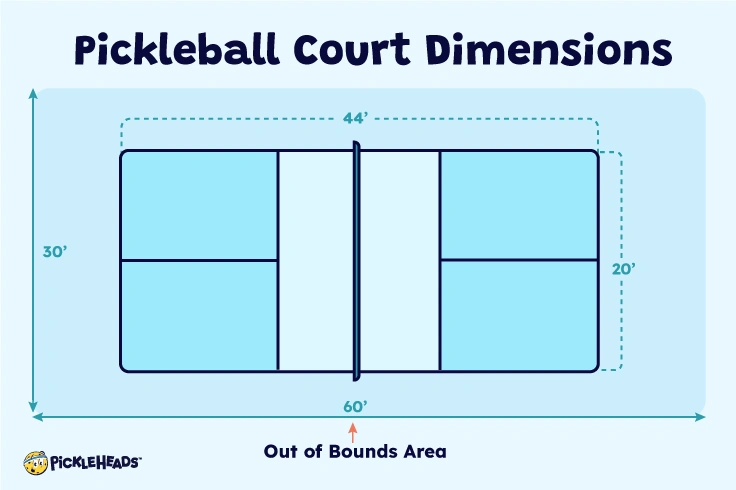 Image Source : www.pickleheads.com
Pickleball Court Dimensions Guide - What Is The Size Of A Pickleball
Image Source : racquetsportscenter.com pickleball
Pickleball Court Dimensions | Pickleballin
 Image Source : pickleballin.com
pickleball courts
Pickleball Court - Google Search In 2020 (With Images) | Pickleball
 Image Source : www.pinterest.com
pickleball cancha sportsimports
Full Size Pickleball Court 60'x30' | Court Surfaces
Image Source : courtsurfacesfla.com pickleball court size diagram regulation supplies
Pickleball Court Dimensions - What Size Is A Pickleball Court
 Image Source : strictlypickleball.com
court pickleball dimensions size ball pickle area kitchen feet side history suck if so upcoming future sport specifications london post
Pickleball Courts - USA Pickleball | Pickleball, Pickleball Court, Court
 Image Source : www.pinterest.com
pickleball pickle courts
Pickleball court dimensions. Pickleball cancha sportsimports. What are the dimensions of a pickleball court?. Pickleball courts. Pickleball court dimensions guide