Regulation D Rule 505 : What it is
Regulation D Rule 505 is an important regulation that has a significant impact on various aspects of the financial world. In this post, we will explore what Regulation D Rule 505 is all about, its advantages, and how it affects investors and businesses alike. So sit back, relax, and let's dive right into it!
Advantages of Regulation D Rule 505

One of the major advantages of Regulation D Rule 505 is its ability to provide companies with greater flexibility in raising capital through the sale of securities. By complying with the rules and regulations set forth by Regulation D Rule 505, businesses can offer their securities to a broader range of potential investors, including accredited and non-accredited individuals.
This flexibility opens up opportunities for smaller businesses and startups to access much-needed capital to fuel their growth and development. Additionally, the regulations allow companies to avoid some of the more stringent reporting and disclosure requirements that would typically apply to public offerings, reducing administrative burdens and costs.
The Book on PPMs: Regulation D Rule 505 Edition

If you are interested in delving deeper into the intricacies of Regulation D Rule 505, then "Clocoxepac: The Book on PPMs: Regulation D Rule 505 Edition" is a must-read. This comprehensive guide provides valuable insights and practical advice on navigating the complexities of Regulation D Rule 505.
Written by industry experts, this book covers everything you need to know about conducting a successful private placement memorandum (PPM) under Regulation D Rule 505. From structuring your offering to marketing your securities and complying with all the necessary regulations, this book is your go-to resource for mastering Regulation D Rule 505.
Frequently Asked Questions (FAQ) about Regulation D Rule 505
As with any complex regulation, Regulation D Rule 505 raises several questions in the minds of investors and businesses. Below, we have compiled a list of frequently asked questions to provide you with a clearer understanding of this regulation.
1. What is the main purpose of Regulation D Rule 505?
Regulation D Rule 505 aims to provide companies with a streamlined process for raising capital through private placement offerings. It offers businesses the opportunity to raise funds from both accredited and non-accredited investors, expanding their potential investor base.
2. What are the eligibility criteria for companies seeking to utilize Regulation D Rule 505?
Companies must meet certain criteria to qualify for Regulation D Rule 505. They are required to be private companies, not public corporations, and they are restricted in the amount of money they can raise within a 12-month period.
3. Are there any limitations on the types of securities that can be offered under Regulation D Rule 505?
Regulation D Rule 505 allows companies to offer various types of securities, including equity shares, convertible debt, and warrants. However, there are restrictions on the transferability of these securities, and they are not traded on public exchanges.
These were just a few of the frequently asked questions concerning Regulation D Rule 505. Remember, it's crucial to consult legal and financial professionals for personalized guidance tailored to your specific situation.
So there you have it, a comprehensive overview of Regulation D Rule 505, its advantages, and its impact on businesses and investors. With this knowledge in hand, you can now navigate the world of private placement offerings with greater confidence and understanding.
Disclaimer: The information provided in this post is for educational and informational purposes only and should not be considered as legal or financial advice. Always seek professional guidance from legal and financial experts before making any decisions related to securities offerings.
Source: Data provided anonymously.The Book On PPMs Regulation D Rule 505 Edition | A Private P… | Flickr
 Image Source : www.flickr.com
Reg. D Rule 506(b-c) Quick Comparison Chart — MW Law
 Image Source : mwfirm.com
Ppm Regulation D Rule 505 | In Addition To A Complete Explan… | Flickr
 Image Source : www.flickr.com
The Book On PPMs: Regulation D Rule 505 Edition New Renaissance Series
 Image Source : www.chamblinbookmine.com
renaissance ppms strategies regulation rule corporate edition series book volume scott james
Clocoxepac: The Book On PPMs: Regulation D Rule 505 Edition (New
 Image Source : clocoxepac.blogspot.com
The Book On PPMs: Regulation D Rule 505 Edition New Renaissance Series
 Image Source : www.chamblinbookmine.com
Advantages To Regulation D Rule 505 Advantages To Regulation
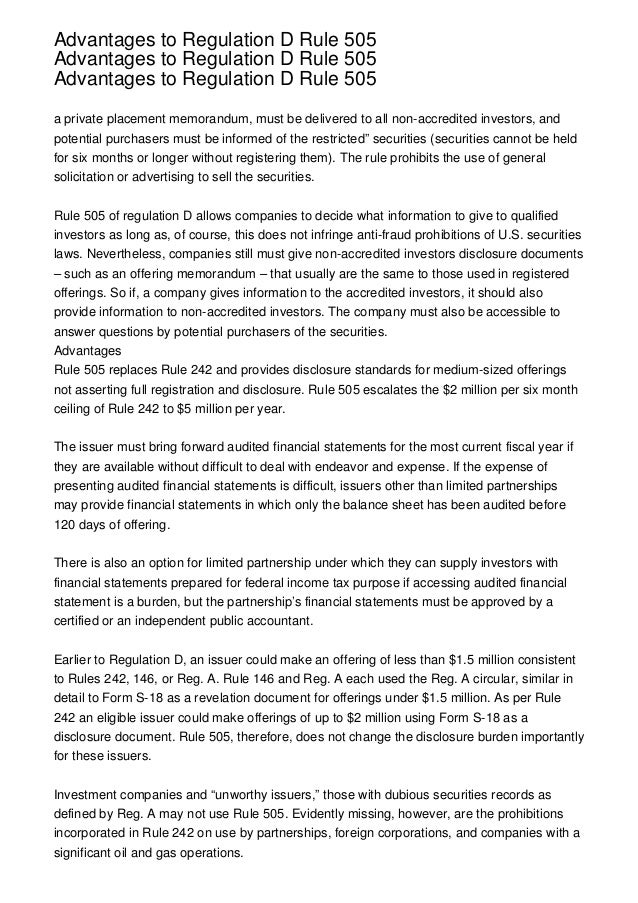 Image Source : www.slideshare.net
regulation advantages
Regulation D, Rule 506(c) Private Placements - Carofin - An Alternative
 Image Source : carofin.com
Ppm regulation d rule 505. Regulation advantages. Advantages to regulation d rule 505 advantages to regulation. The book on ppms: regulation d rule 505 edition new renaissance series. Renaissance ppms strategies regulation rule corporate edition series book volume scott james