Securities Regulation Outline
Securities Regulation Outline
Securities regulation is a vital aspect of the financial industry. It provides a framework for governing the issuance, sale, and trading of securities to protect investors and promote fair markets. In this article, we will explore the key concepts and principles covered in the Securities Regulation Outline.
1. Introduction to Securities Regulation
Securities regulation encompasses a wide range of laws, regulations, and rules that govern the securities industry. It aims to ensure transparency, fairness, and integrity in the financial markets. Here are some crucial components of securities regulation:
- Disclosure Requirements: Companies must provide accurate and timely information about their operations, financial condition, and risks to investors.
- Registration Process: Companies issuing securities to the public must register them with the appropriate regulatory authorities.
- Anti-Fraud Provisions: Securities laws prohibit misleading statements, omissions, and other fraudulent activities in connection with the sale or purchase of securities.
2. Key Players in Securities Regulation
Various entities play significant roles in the regulation of securities. Understanding their functions is crucial to comprehending how securities regulation works. Here are some key players:
- Securities and Exchange Commission (SEC): The SEC is the primary regulatory body responsible for enforcing federal securities laws in the United States.
- Financial Industry Regulatory Authority (FINRA): FINRA is a self-regulatory organization that oversees brokerage firms and professionals in the securities industry.
- State Securities Regulators: Each state has its own securities regulator that enforces state-specific laws and regulations.
3. Important Concepts in Securities Regulation
When studying securities regulation, certain concepts are critical to understanding the framework. Let's explore some of these concepts:
3.1 Securities
Securities are financial instruments or investment contracts that represent ownership in a company or a debt owed by an entity. Common types of securities include stocks, bonds, and options.

Image description: Securities Regulation Outline Image 1
3.2 Registration Statement
A registration statement is a document filed with the SEC that provides essential information about a security offering. It includes details about the company, its management, financial statements, and potential risks.

Image description: Securities Regulation Outline Image 2
3.3 Insider Trading
Insider trading involves the buying or selling of securities based on material non-public information. It is illegal and undermines the integrity of the financial markets.
FAQs
Q: Are all securities required to be registered?
A: No, certain exemptions exist that allow securities to be exempt from registration, such as private offerings to accredited investors.
Q: How does securities regulation protect investors?
A: Securities regulation aims to protect investors by ensuring companies provide accurate and complete information and by preventing fraudulent and manipulative practices in the financial markets.
Q: Can state securities regulators enforce federal securities laws?
A: Yes, state securities regulators can enforce federal securities laws within their jurisdictions and also have the authority to enforce state-specific securities laws.
Conclusion
The Securities Regulation Outline is an essential tool for understanding the complexities of securities regulation. It covers a wide range of topics, including disclosure requirements, registration processes, and anti-fraud provisions. By familiarizing ourselves with these concepts, we can navigate the securities industry with greater knowledge and confidence.
Disclaimer: The above content is for informational purposes only and should not be construed as legal or investment advice.
Co-created by: [Your Name]Securities Regulation Course Outline
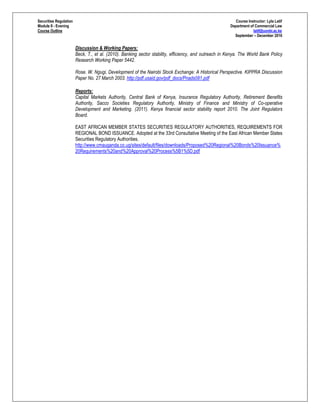 Image Source : www.slideshare.net
SECURITIES REGULATION OUTLINE
 Image Source : studylib.net
Securities Regulation Outline
 Image Source : studylib.net
SEC Proposes New Rules That Would Increase The Financial Thresholds For
 Image Source : www.jdsupra.com
securities proposes jdsupra thresholds qualification increase amendments announcing
Securities Regulation Outline 1 .docx - Part 1: Is It A Security The
 Image Source : www.coursehero.com
Securities Regulation Outline | LAW 640 - Securities Regulation - ASU
 Image Source : www.thinkswap.com
Securities Regulation Outline - Securities Regulation W/ Jonathan Barry
 Image Source : www.studocu.com
Sec Reg Outline-3 - Lecture Notes All - Securities Regulation Outline I
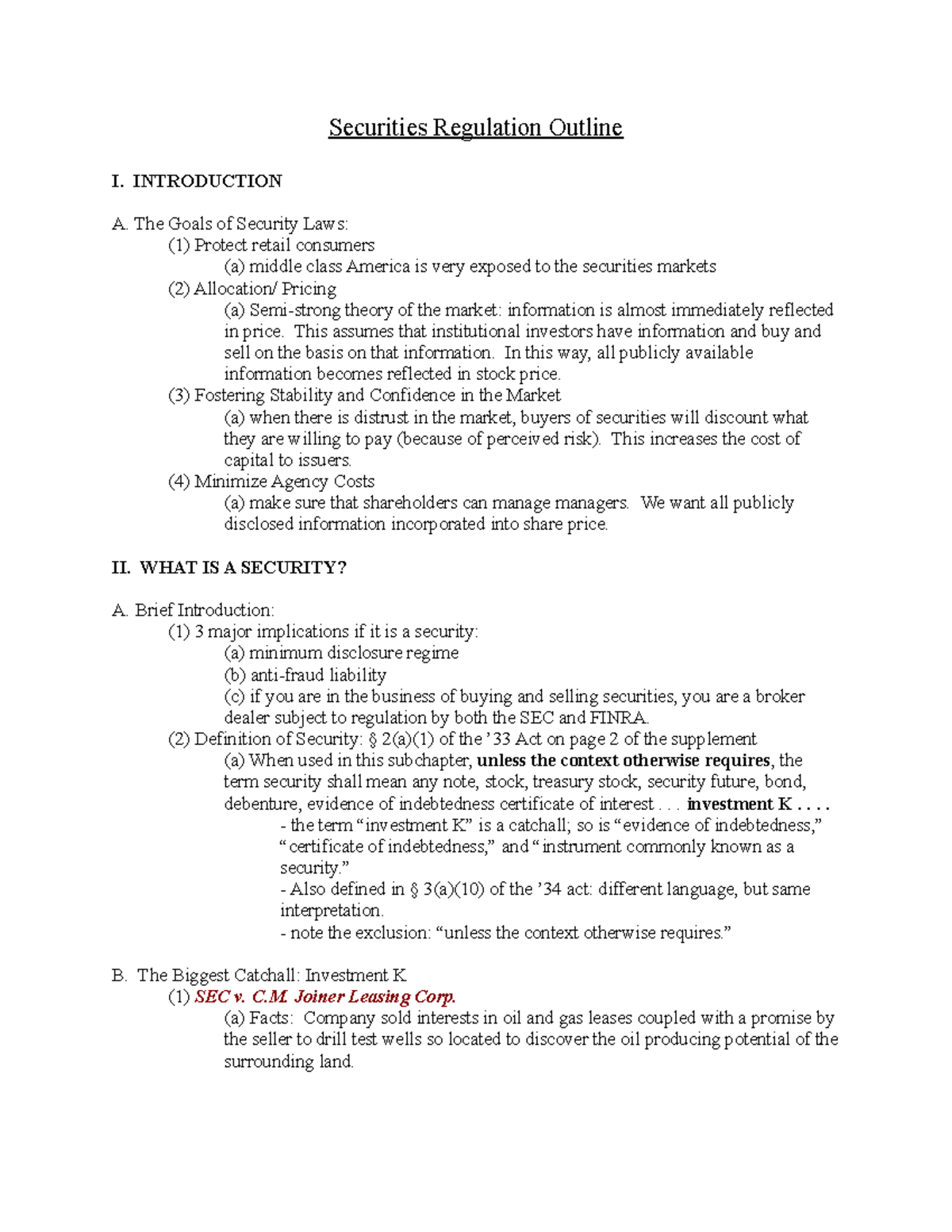 Image Source : www.studocu.com
Sec proposes new rules that would increase the financial thresholds for. Securities regulation outline. Securities regulation course outline. Sec reg outline-3. Securities regulation outline