Is Lac Operon Positive Or Negative Regulation
Is Lac Operon Positive Or Negative Regulation?
The lac operon is a genetic system found in bacteria, specifically in Escherichia coli (E. coli), that controls the expression of genes related to the metabolism of lactose. It consists of three main components: the regulatory gene lacI, the promoter, and the operator. The regulation of the lac operon can be either positive or negative depending on the presence or absence of certain molecules. Let's explore the positive and negative regulation of the lac operon in detail.
Positive Regulation of Lac Operon

The positive regulation of the lac operon occurs when an activator protein called the catabolite activator protein (CAP) binds to a specific site on the DNA, known as the CAP site. CAP is also known as the cAMP receptor protein (CRP) as it requires cyclic adenosine monophosphate (cAMP) for activation. The binding of CAP-cAMP complex to the CAP site enhances the binding affinity of RNA polymerase to the promoter region, resulting in increased transcription of the lac operon.
In the absence of glucose, the levels of cAMP increase in the bacterial cell. This high concentration of cAMP allows CAP to bind to the CAP site near the promoter, leading to the positive regulation of the lac operon. Positive regulation helps the bacteria to efficiently utilize lactose as an alternative carbon source when glucose is limited.
Negative Regulation of Lac Operon

The negative regulation of the lac operon occurs when a repressor protein, encoded by the regulatory gene lacI, binds to the operator region. The binding of the lac repressor to the operator prevents RNA polymerase from binding to the promoter, thereby inhibiting transcription of the lac operon.
In the absence of lactose, the lac repressor is in its active form and tightly binds to the operator, effectively shutting down the lac operon genes. However, when lactose is present, it acts as an inducer by binding to the lac repressor and causing a conformational change. This change in lac repressor's structure weakens its binding affinity for the operator, allowing RNA polymerase to bind to the promoter and initiate transcription of the lac operon genes.
Positive or Negative: When Does Each Regulation Apply?
Now that we have explored both positive and negative regulation of the lac operon, let's understand when each regulation applies.
- Positive Regulation: Positive regulation occurs when glucose is scarce or absent in the bacterial cell and alternative carbon sources, such as lactose, are present. In this scenario, the elevated levels of cAMP and the binding of CAP-cAMP complex to the CAP site enhance the transcription of the lac operon genes.
- Negative Regulation: Negative regulation takes place when glucose is available in the bacterial cell and lactose is absent or present in low concentrations. In the absence of lactose, the lac repressor actively binds to the operator, preventing transcription of the lac operon genes. When lactose is present or increases, it acts as an inducer by binding to the lac repressor, allowing transcription to occur.
FAQs (Frequently Asked Questions)
Q: What is the function of the lac operon?
A: The lac operon allows bacteria to efficiently metabolize lactose as an alternative carbon source when glucose is limited or absent.
Q: How does positive regulation of the lac operon occur?
A: Positive regulation of the lac operon occurs when the catabolite activator protein (CAP) binds to the CAP site in the presence of high levels of cyclic adenosine monophosphate (cAMP). This enhances the binding affinity of RNA polymerase to the promoter, leading to increased transcription of the lac operon genes.
Q: What is the role of the lac repressor in negative regulation?
A: The lac repressor is responsible for negative regulation of the lac operon. It binds to the operator region and prevents RNA polymerase from binding to the promoter, thereby inhibiting transcription of the lac operon genes.
Q: How does lactose act as an inducer in negative regulation?
A: Lactose acts as an inducer by binding to the lac repressor and inducing a conformational change. This change weakens the lac repressor's binding affinity for the operator, allowing RNA polymerase to bind to the promoter and initiate transcription of the lac operon genes.
Q: What happens when both glucose and lactose are present?
A: When both glucose and lactose are present, glucose is preferred as the primary carbon source due to its higher efficiency in energy production. In this scenario, the presence of glucose leads to low levels of cAMP, inhibiting the positive regulation of the lac operon. As a result, even if lactose is present, the lac repressor remains bound to the operator, and transcription of the lac operon genes is minimal.
Q: Are there any other factors that influence lac operon regulation?
A: Yes, apart from glucose and lactose, other factors such as temperature, pH, and the presence of specific mutations can also affect lac operon regulation. These factors can alter the binding affinity of various proteins involved in the regulation process, leading to variations in lac operon expression.
The lac operon showcases a fascinating mechanism of gene regulation in bacteria. The interplay of positive and negative regulation allows bacteria to efficiently adapt to different environmental conditions and utilize available carbon sources. Understanding these regulatory processes provides valuable insights into the complex world of genetic control.
Is The Lac Operon A Negative Or Positive Control System? | Socratic
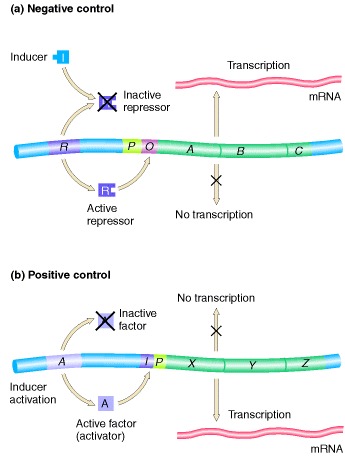 Image Source : socratic.org
 positive operon negative lac control system socratic transcription read
Positive Regulation Of The Lac Operon By The Activator (see Online
 Image Source : www.researchgate.net
 operon regulation positive activator
Lac Operon- Definition, Structure, Inducers, Diagram
Image Source : microbenotes.com operon lac gene lactose induction locus prokaryotes coli inducers definition monod absense prokaryotic inducer trp lactosa biologia rna polymerase
Latest Regulation: Positive Gene Regulation Vs Negative Gene Regulation
 Image Source : regulationlatest.blogspot.com
 regulation operon lac lecture transcription prokaryotic
Picture | Biology Lessons, Science Biology, Teaching Biology
 Image Source : www.pinterest.com
 operon lac biology regulation regulatory positive proteins model expression mechanism science concentration bacteria dna genes interact molecular result life transcription
Biology Learning : Describe The Positive And Negative Control Of Lac
Image Source : readthebiology.blogspot.com operon learning
Diagram Of Lac Operon
 Image Source : wiringall.com
 operon lac diagram gene prokaryotes expression lactose negative repressor regulation control positive protein induction inducer coli biology repression glucose regulator
Lac Operon: Mechanism And Regulation • Microbe Online
 Image Source : microbeonline.com
 Operon regulation positive activator. Lac operon- definition, structure, inducers, diagram. Lac operon: mechanism and regulation • microbe online. Positive regulation of the lac operon by the activator (see online. Regulation operon lac lecture transcription prokaryotic